The Prompt Report
Your monthly update on what happens when creativity and AI start sharing a desk.

The IP Gold Rush
The past month in AI has felt less like a technology story and more like a media story.
Studios are sitting on vast libraries of characters, worlds, and back catalogues. At the same time, AI video, image, and voice models are rapidly lowering the cost of making new content. Those two forces are beginning to collide.
This month’s Prompt Report explores what that collision means, from Hollywood’s shift toward AI-powered franchises to the emergence of the one-person studio.
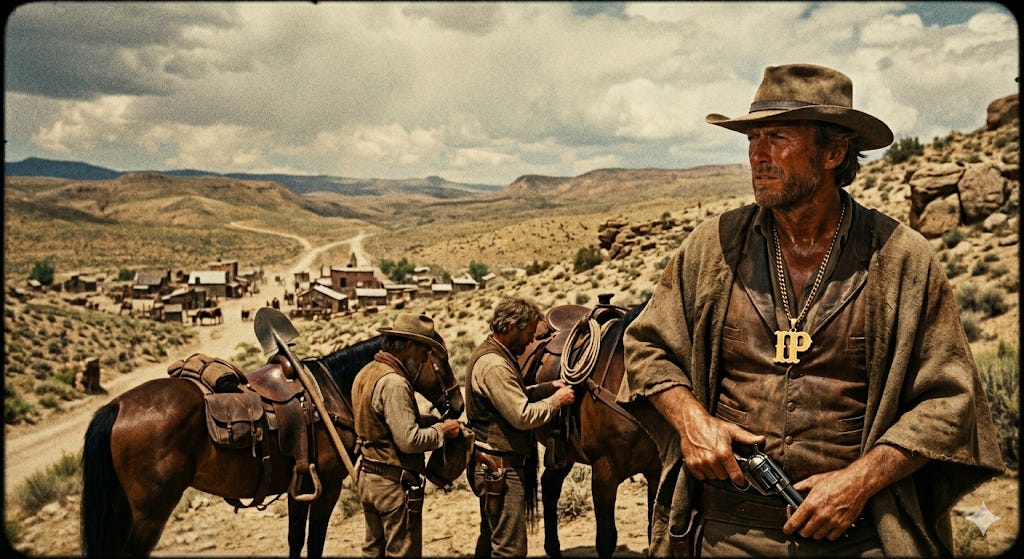
This looks less like an IP gold rush image and more like the murderous members of the IP gang (but I thought it looked cool).
Paramount’s Plan to Turn the Warner Bros Library Into an
AI Engine
When large media companies merge, the usual logic is scale. Bigger distribution. Bigger negotiating power. Bigger budgets.
Paramount’s acquisition of Warner Bros is different. The real asset might not be production capacity, but the IP library.
Warner Bros owns one of the deepest catalogues in entertainment. DC characters. Looney Tunes. Harry Potter. Game of Thrones. Decades of films and television.
The emerging strategy being discussed in media circles is that AI could dramatically increase how often these worlds are reused. Think localized spin-offs, short-form content, experimental formats, or niche audience versions of existing franchises. Basically, what Disney has done with Star Wars on steroids.
If generative video dramatically lowers production costs, the constraint is no longer filmmaking. It is owning characters people care about.
That makes IP the new oil (so expect a lot more drilling in the Harry Potter universe).
Jono’s Take
For years, the creative industry assumed AI would commoditize ideas. What might actually happen is the opposite. Original IP could become the most valuable creative asset on earth.
Adobe Is Turning Photoshop Into an AI Operating System
Adobe’s AI strategy is easy to underestimate because it arrives disguised as small features. Generative Fill. Remove Object. Expand Image. Style Transfer. Background replacement.
Individually, they look like iterative updates. Together, they are turning Photoshop into something closer to an AI-assisted creative operating system.
Instead of jumping between tools or plugins, the AI layer is starting to sit behind almost every action inside the app. Need a wider frame. Expand it. Need new objects. Generate them. Need a different lighting mood. Describe it. And they’re not the only ones. Google is pulling Gemini through all their tools right in the places you need them. Not the right image in that Google Slides? Just generate a new one in the toolbar and drop it in. Gone are the days of 1000’s of images pasted to desktop backgrounds, the images are already waiting for you in the deck.
These features reduce the friction between idea and iteration. A concept that used to require multiple assets, stock searches, or 3D builds can now happen directly inside the canvas or deck.
Which is exactly where most creative thinking already happens.
Jono’s Take
Everyone thought Photoshop was going away as soon as DALL-E and Midjourney arrived on the scene, but their strategy has been brilliant. Instead of replacing creative tools, they are making them more magical while keeping the familiar interface designers already love. It’s one of the best examples of a company at risk merging with AI to make itself stronger and more future-proof.
The Rise of the One-Person Creative Studio
One of the most interesting shifts happening right now is structural.
A growing number of designers, filmmakers and creative technologists are producing work that used to require entire small teams.
A designer with Midjourney can generate concept art. A filmmaker with Runway can prototype sequences. A copywriter with language models can spin up dozens of variations instantly.
Put those together, and a single person can operate like a tiny creative studio.
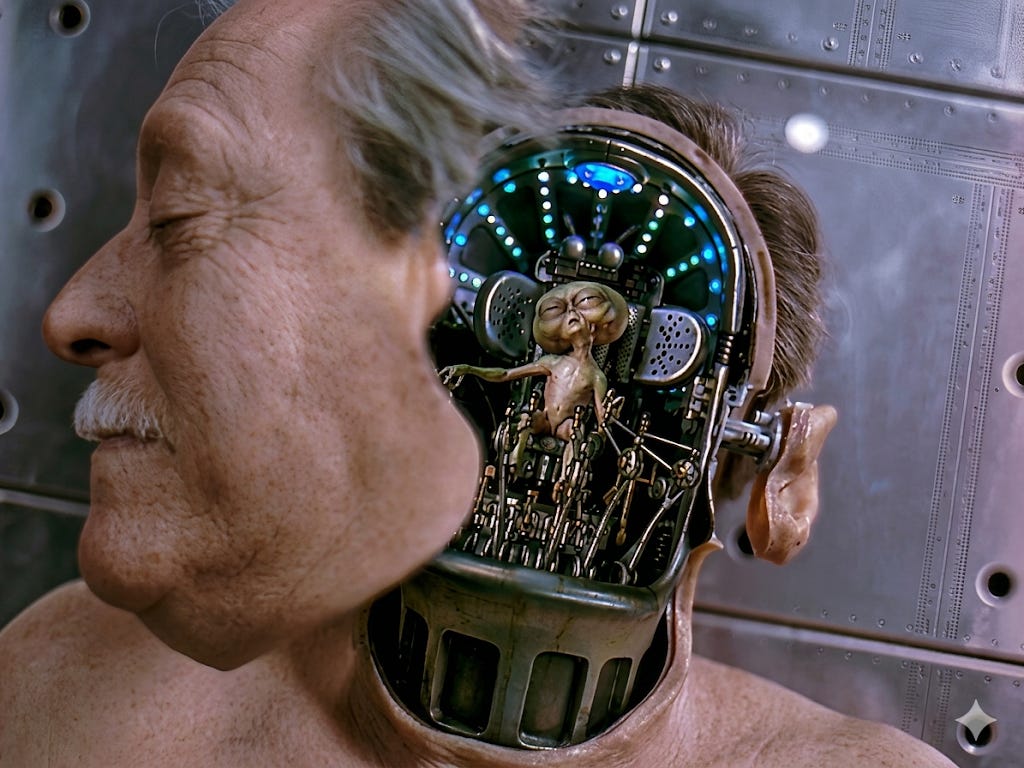
Creative studios are getting smaller.
We are already seeing this in short films, brand experiments, and indie creative projects online. Work that looks surprisingly polished but was produced by one or two people.
This does not mean agencies disappear, but it does challenge the assumption that certain types of creative output require large teams.
AI is compressing the production stack.
Jono’s Take
The most interesting agencies of the next decade might look less like orchestras and more like one-man bands. Small teams directing incredibly powerful tools. As the big holding companies continue to grow, there will be clients that are looking for the independence of the indie studios that can create the same magic on a smaller scale.
Runway Might Replace the Mood Board
For years, the early stages of creative development have looked roughly the same.
Mood boards. Reference imagery. Style frames. Early concept sketches.
Runway’s latest generative tools are starting to change that process.
Instead of collecting references, creative teams can now generate moving visuals that approximate the final tone of a project. Camera styles. Lighting direction. Scene composition. And of course motion.
It means that the pre-production phase becomes more cinematic much earlier.
Directors can test visual ideas before shooting. Agencies can show clients animated concepts rather than static boards. Creative teams can explore dozens of directions quickly.
It is not finished with production quality. But it is close enough to shift how ideas get pitched.
Jono’s Take
Mood boards were always a slightly awkward translation of an idea. AI video is starting to let creatives skip the translation step entirely. The issue I’ve found here is that clients are willing to forgive a scamp or mood board as just an early visualization of an idea. Whereas when you show them video, it feels as though it’s the finished product and is scrutinized as such.
What I Tried This Month
This month, I experimented with a simple workflow tweak known as Meta Prompting, which ended up being surprisingly useful.
Instead of prompting image models directly for final visuals, I started prompting for art direction language first.
For example, I asked ChatGPT to generate five different art direction briefs for a campaign idea. Each brief described lighting, lens choices, colour palette, mood, and composition.
Then I used those descriptions as prompts inside Midjourney.
The result was noticeably better imagery. Not because the model changed, but because the prompts were written like a creative brief instead of a request.
It turns out AI tools respond well to the same thing human creatives do - Clear direction. Something that shouldn’t have been entirely surprising to someone with Creative Director in their title.
Closing Thought
The narrative around AI in creativity tends to focus on tools.
But the deeper shift might actually be about assets and structure.
Studios are realizing their IP libraries may be more valuable than ever. Individual creatives are realizing they can produce more than ever. And the cost of visual experimentation is falling fast.
That combination is going to produce a lot of strange new work.
Some of it will be terrible. Some of it will be brilliant.
Either way, it is going to be very interesting.
End Prompt.
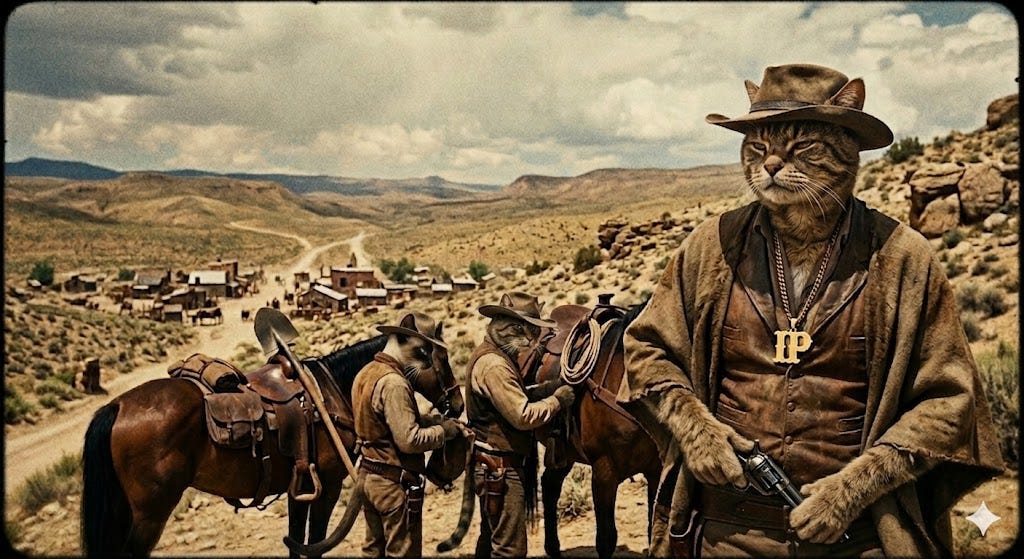
One possible interesting future if AI is kind.