The Prompt Report
Welcome to your monthly Prompt Report, a short, curious wander through what happens when creativity and AI start sharing a desk.

1. The Browser Becomes the Creative Agent:
Introducing ChatGPT Atlas
OpenAI’s new ChatGPT Atlas dropped this month, a full web browser built around AI, not just with it. It embeds ChatGPT directly into the sidebar so you can summarise research, analyze data, or even hand off tasks. Its “agent mode” can click around for you: fill in forms, compare sites, and make bookings.
Watching Atlas’ agent suddenly take over your cursor is eerily similar to IT remotely logging in to help you unlock your computer after failing to submit your timesheets, but much more fun.
For creatives, it’s a glimpse of the near future: research, inspiration, and campaign planning all happening inside an environment that doesn’t just show you the web, but interprets it for you. That shifts the workflow, as well as the sense of control.
Jono’s Take: Atlas isn’t just a browser. It’s a creative assistant that sits on your shoulder, occasionally steals your mouse, and reminds you how fragile your sense of agency really is, and it feels like the next stage of the internet.
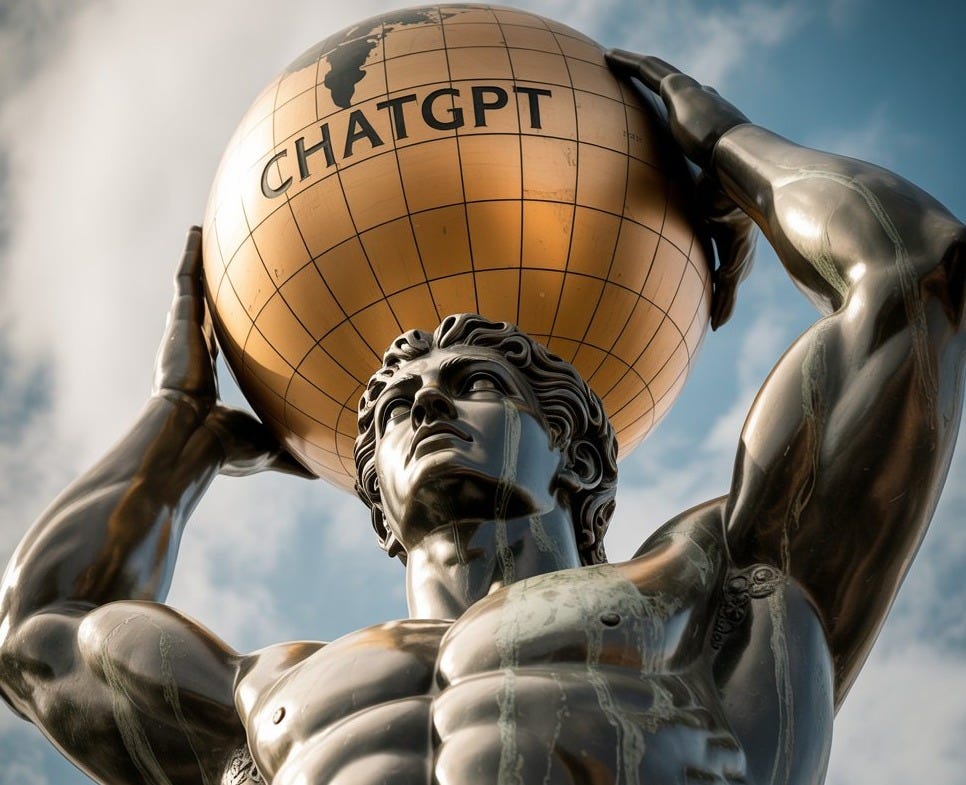
2. Human Creativity Is Getting A Branding Boost
There’s a strong undercurrent this month: while AI tools proliferate, the industry is emphasizing human creativity harder than ever. For instance:
An industry piece notes that creatives are being treated as central players in marketing’s AI revolution. Marketing Week
At Advertising Week New York (Oct, 2025), the sessions were headlined: “Making marketing more human in the age of AI”. AI Agent Store+1
A new report from Adobe says 86 % of creators globally are using creative generative AI and expect a human-in-the-loop experience. news.adobe.com
If AI becomes commoditized, the differentiator shifts to the ‘human code’. For agencies, that means rethinking not just what we do, but how we show we did it. The creative idea, the narrative, the craft of language and detail, all become the premium.
Jono’s Take: The tools are showing up faster than ever. By leaning into the human bit, emotion, absurdity, and risk, we’ll continue to differentiate ourselves from the algorithms.
3. Agency Models Are Getting Shaken
WPP has launched an upgraded version of its AI-marketing platform, letting brands skip agencies and create campaigns directly. Reuters
Brands are making public moves to reject AI imagery. Aerie pledged not to use AI-generated bodies or people in its ads; it became their most popular Instagram post in a year. Business Insider
The “agency” is under pressure from two directions: tools that enable self-service, and consumer backlash against perceived automation or inauthenticity. For creatives, this means the work has to be distinct to survive.
Jono’s Take: If the brand can plug into an AI and produce 10 variants of an ad in a day, what premium are we charging? The premium is now in the idea, the strategy, the connective tissue, not the template.
4. A Tsunami of Video Generation with Sora 2
Sora 2 is here: advanced video and audio generation from OpenAI. It’s more controllable, more realistic, supports “cameos” (insert yourself or a character), and is already showing up in creative feeds. OpenAI+2OpenAI+2
The internet is reacting, yes, productivity might drop (because we’ll all spend way too long generating stuff like this), and yes, it’s also spawned a wave of horrifyingly disturbing deepfakes and viral chaos.
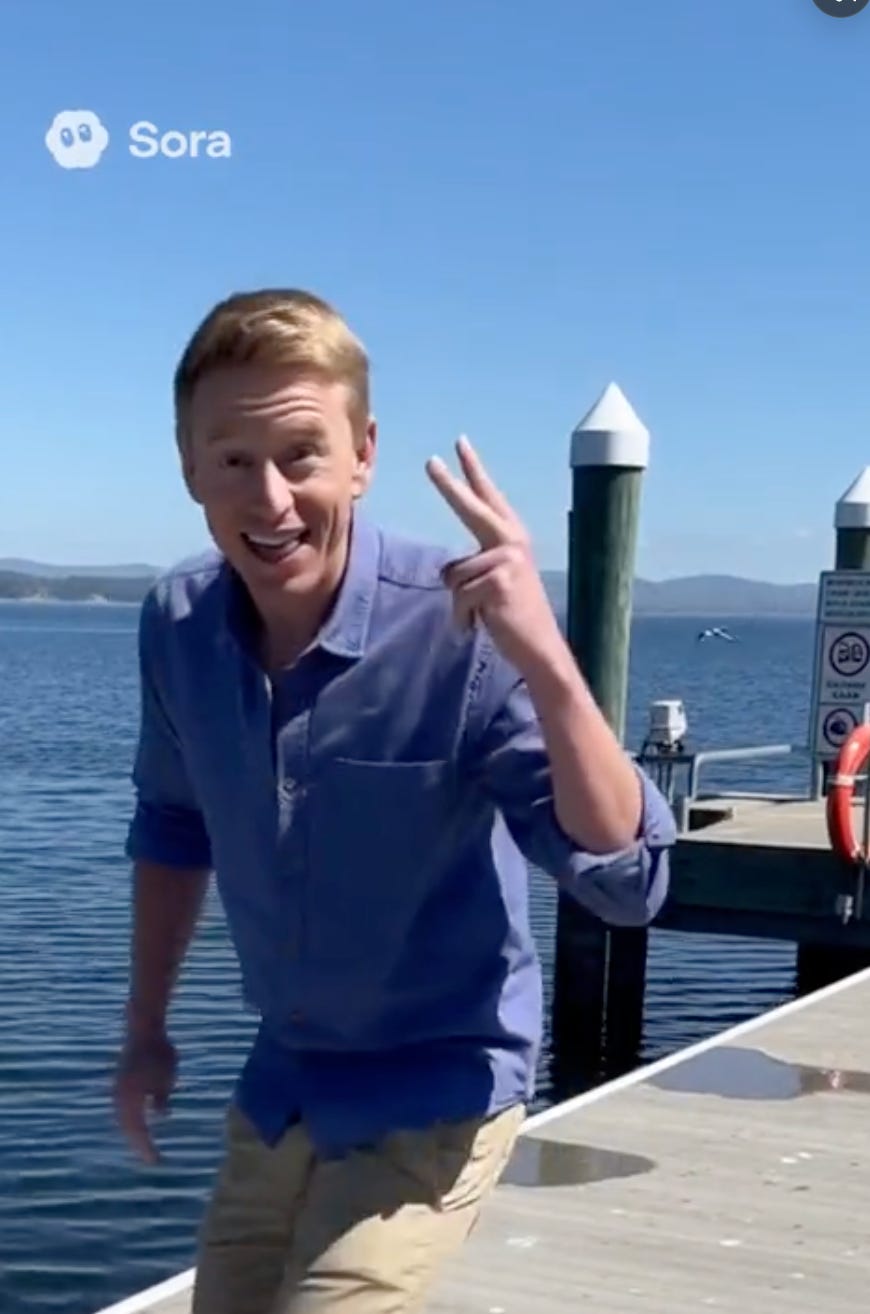
Jono’s Take: Sora 2 feels like another leap in text-to-video generation. The ability to insert yourself into the films and use keyframes to start them means you’ll be able to build out longer narratives and stitch scenes. Something Veo still struggles with. I’ve been playing around with it to varying degrees of success/humiliation. In one example, my parents sent me a photo of some pelicans on a pier. I thought it would be funny to insert myself into their holiday scene (invited), but Sora created a whole extra narrative, including me yelling, “That is cold!” After I scare the birds, followed by “Peace,” two things I’ve never said in the real world. Finally, it gave me an overexcited TikTok creator vibe, best summed up as an annoying tool (see below).
5. Content: Legal, Ethical, and Creative Friction Rising
As creative AI gets up to speed, so do the questions. Among them, whose content is being used? What do human creators get? For example:
A piece from RMIT University warns that LLMs may be replacing artists and creating “Frankenstein-like” products cobbled from stolen work. RMIT University
Another article calls for preserving human authorship in creative work, not just as legal ownership, but as cultural value. The Saturday Paper
In the advertising/creative business, sourcing, authorship, and originality used to be givens. Now they’re under literal scrutiny. For an agency with IP in a campaign, what rights do you have if generative AI contributed?
Jono’s Take: We used to worry about ad fraud. Now we’re worrying about ad-authorship. The tech is great, but if we don’t protect the human in the loop, we lose the reason we’re here.
Final Thoughts
This month felt like the ground under us quietly shifted. A browser that acts like an assistant. Agencies are rethinking their role, and consumers are demanding authenticity.
I think the next 12-18 months will be less about the “can AI do X” and more about “how do we do X better than AI can and make people pay for that difference”.
As creatives in the advertising industry, our job is shifting from making work to making work matter, and luckily, that is a trickier brief to automate.
End Prompt