The Prompt Report
Your new creative partner has read the entire internet.

The last few months have felt like a recurring loop that’s speeding up. Every month, the AI tools get better. The videos become more realistic. The images become more convincing. The agents become more capable. But the output often feels strangely familiar. It’s less slop and more like AI stock.
And with this has been somewhat of a pushback. Not against AI itself. Against the sameness that comes with infinite generation. Some of the most interesting creative work wasn’t the most technologically impressive. It was the most unmistakably human.
The more abundant synthetic content becomes, the more valuable originality, judgement, and human ingenuity seem to get.
AI Slop Creates A Market For Human Craft
One of the best things I watched this month wasn’t AI-generated at all.
GENER8ION and Yung Lean released Storm, directed by Romain Gavras with choreography from Damien Jalet. It’s chaotic, physical, and deeply human. Hundreds of bodies moving with frightening precision through what feels like a schoolboy fever dream.
As AI video becomes cheaper and infinitely scalable, physical craft suddenly carries more cultural weight.
The scarcity is shifting. Not from content. From proof of effort. Audiences seem increasingly drawn to evidence that something actually happened. That people rehearsed it, built it, and committed to it. This took effort.
A similar theme surfaced recently in comments from Take-Two Interactive CEO Strauss Zelnick. Discussing AI, he argued that technology can make creators more productive, but breakthrough entertainment still depends on human ingenuity. The next Grand Theft Auto won’t succeed because it used better tools. It’ll succeed because someone had a better idea.
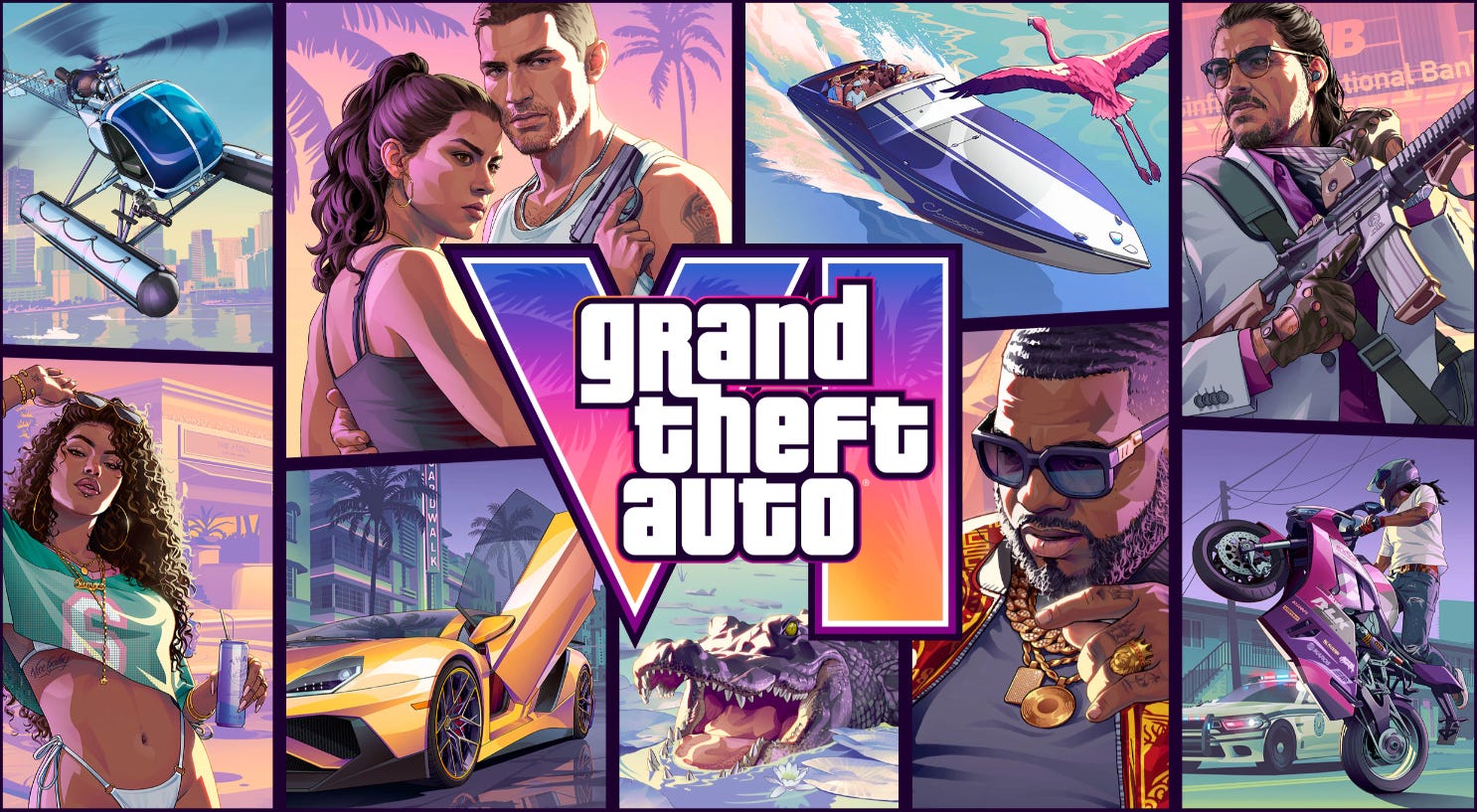
GTA 6 is set to be the biggest entertainment release in history, overtaking GTA 5.
AI is amazing at generating content, but human creativity is still responsible for generating culture. For now.
Jono’s Take
The future probably isn’t humans versus AI. It’s humans doing the things that require lived experience, physicality, and obsession while AI handles the scaffolding around it. The more content becomes infinite, the more valuable authentic human effort seems to become.
OpenAI Enters The Ad Business
We all knew it was coming, and not just because of Anthropic’s awesome Super Bowl campaign (almost as good as the Bud spot).
OpenAI has begun introducing advertising into ChatGPT, creating a direct pathway for brands to reach users inside the world’s fastest-growing consumer AI platform.
This changes the relationship between AI and advertising quite dramatically.
Until now, AI has mostly been the tool behind the work. Now the interface itself is becoming media inventory.
The interesting question was never when ads arrive in AI. Advertising eventually follows attention. The real question is what happens when recommendations and advertising occupy the same environment. I’ve talked in previous posts about AI’s ability to manipulate users and what this could mean for the legality of advertising in the actual model.
Search was built around intent. AI is built around trust. The tension between those two things will define the next phase of digital advertising.
Jono’s Take
Advertising follows attention like seagulls follow hot chips. The challenge for AI companies is maintaining trust while monetising it. Historically, that balancing act has been difficult.
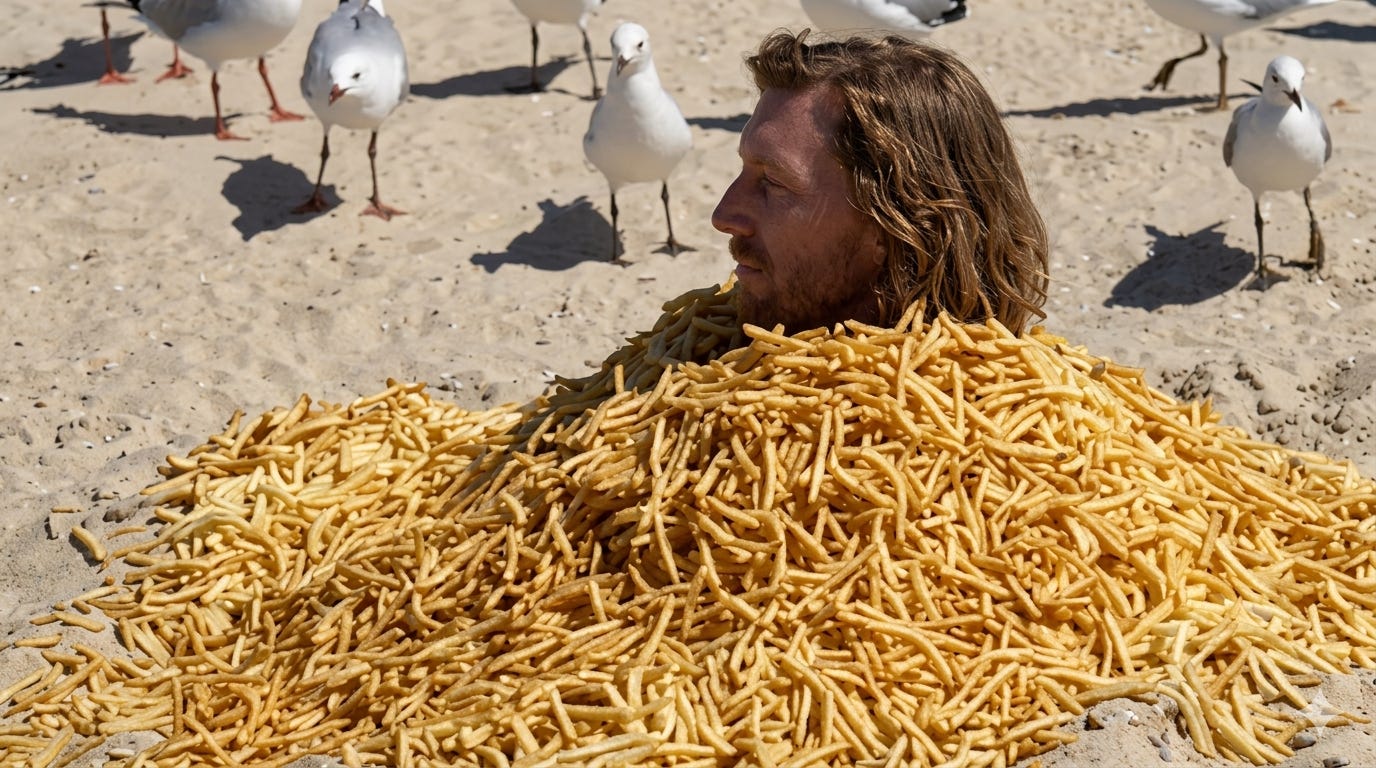
Give the seagulls what they want.
AI Video Has Entered Its Panic Phase
Hollywood had another small panic attack recently.
The latest generation of AI video models continues to close the gap between synthetic footage and traditional production. What felt experimental twelve months ago now looks almost commercial.
Veo, Sora, Kling and Seedance are already finding their way into advertising workflows, pre-visualisation pipelines and content production systems.
The predictable response is repulsion, followed by panic, and understandably so. The more useful response is probably adaptation (or maybe starting a blog so you keep track of things). AI can now reproduce aesthetics with startling accuracy.
What it still struggles with is intention. Why this shot? Why this moment? Why this emotion? Technology keeps lowering execution costs, but doesn’t automatically create perspective.
Jono’s Take
The “AI replaces filmmakers” story feels a bit simplistic. Cameras didn’t replace directors. Photoshop didn’t replace photographers. The tools become more accessible. Talent becomes more valuable.
The Bigger Creative Risk Is Sameness
A theme keeps appearing across research, agency conversations, and creative communities. AI is very good at averaging culture.
The systems are trained on existing patterns, existing aesthetics and existing behaviours, which makes them excellent at producing competent work and surprisingly bad at producing genuinely unexpected work. Competence scales. Distinctiveness doesn’t.
As more teams use the same models, the same prompts and the same workflows, creative output starts to converge. Everything looks polished. Everything works. Everything feels strangely interchangeable.
The future creative advantage may simply come from having stranger references, more unusual combinations and a willingness to follow ideas somewhere unexpected.
There are similarities in the ad industry that are summed up beautifully in this white paper from System1: The extraordinary cost of dull.

According to System1, 50% of ads are less engaging than cows in a field. So put more cows in your ads.
Jono’s Take
AI has made “good enough” almost free. Which was previously where I worked (joking, I try really hard in my day job). Which means surprising work becomes significantly more valuable. Honestly, this might be excellent news for the weirdos who keep worrying with their ideas.
What I Tried This Month
I spent part of this month experimenting with a very stupid but surprisingly useful workflow.
Instead of asking AI for finished ideas, I started using it as a bad-first-draft machine.
The goal wasn’t quality. The goal was originality.
I’d generate large volumes of deliberately average thinking and pay attention to what felt the most weird/novel.
Oddly effective. I’ve long subscribed to the idea that there’s no such thing as a bad idea, because even the really bad ones can lead to a breakthrough. (My Art Director still feels the urge to point out which of my ideas are bad, with alarming frequency).
The strongest ideas often appeared as rejection responses. Not “that’s good.” More like “absolutely not, but it reminds me of something better.”
I also spent more time using voice mode while walking rather than typing prompts at a desk. The outputs became less polished but more conversational. Although walking around talking to an AI is exactly as lame as it sounds. (It’s ok if people think you’re on the phone, until your phone rings).
Closing Thoughts
The AI conversation is maturing. The capabilities keep improving. The disruption keeps accelerating. But something else is becoming clearer too. The real scarcity remains judgement.
We’re entering a world where intelligence is abundant, but what excites me the most is the creative pushback, the yearning for human craft, and the competition from AI that is breeding breakthrough work.
After all, nothing causes you to up your game like discovering someone else is working on the same brief.
End Prompt.